
Dr. Doaa Mohi El-Din: From Artificial Intelligence to Predictive Medicine: A Scientific Vision for a More Humane Medicine
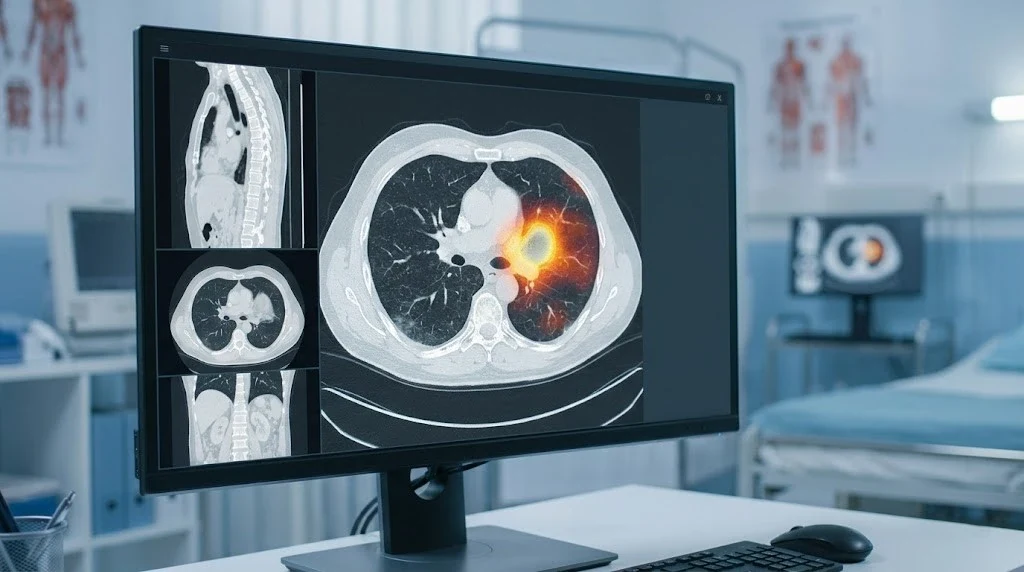
Explainable Artificial Intelligence (Explainable AI – XAI) has become one of the most important transformations in modern medicine. Especially in the fields of disease diagnosis and radiology, where the goal is no longer merely to achieve high predictive accuracy. Rather, it is to develop systems whose decisions can be understood and interpreted by physicians.
This transformation came in response to a fundamental need in the medical sector: trust, safety, and legal accountability in sensitive decisions.
In traditional artificial intelligence models, algorithms – especially deep neural networks – operate as a “black box,” providing a diagnostic result without explaining how they arrived at it. However, in the medical field, this is not sufficient, because a medical decision is not based on the result alone. Rather, it is based on understanding the reason, the reasoning process, and the source of the signal within the medical image.
Therefore, the field of XAI has evolved to provide tools and techniques such as:
These techniques are used to identify the regions within radiology images that influenced the model’s decision.
These tools have now become part of research and clinical systems in the analysis of:
Tumors
Lung diseases
Brain diseases
Heart diseases
Recent scientific reviews up to 2026 indicate that XAI has become an essential component of medical imaging systems, rather than an optional addition. Studies have shown that models that provide visual explanations to physicians achieve higher clinical acceptance compared with non-explainable models, even if their accuracy is similar.
In studies analyzing brain and lung tumors, models that combine more than one explanation technique, such as Grad-CAM + SHAP + LRP, have demonstrated a greater ability to clarify affected areas with multi-level precision: from the pixel level to the anatomical region.
Recent research also indicates that the most widely used applications of XAI in medical imaging are:
The main reason is that the medical field is “high-risk.” Incorrect decisions may lead to inappropriate treatment or delays in diagnosis. Therefore, it is not enough for the system to say “there is a tumor,” but it must explain:
Studies have shown that XAI enhances what is known as “clinical trust” and increases physicians’ willingness to adopt artificial intelligence in medical decision-making, especially in diagnostic radiology.
Recent research points to four main trends:
Combining more than one explanation technique to obtain a multi-level view of the medical decision, instead of relying on only one method.
The goal is no longer to “explain the model,” but to “assist the physician within the workflow,” such as integrating explanations into PACS systems in hospitals.
Recent studies have begun to go beyond evaluating algorithm quality alone, and instead measure:
Combining images with medical reports and clinical data to explain the decision in a more comprehensive manner.
Despite the significant scientific progress, there are still scientific challenges that affect patients’ lives and represent fundamental issues in:
Inconsistency of explanations: The same image may produce different explanations.
Difficulty of clinical validation: Does the explanation actually reflect the reason behind the decision, or is it merely a visual approximation?
The risk of “false trust”: A physician may trust an inaccurate explanation because it appears visually convincing.
The need for unified evaluation standards: Standards are needed to evaluate explanations themselves, rather than evaluating accuracy alone.
The future direction is not moving toward making artificial intelligence merely “understandable,” but toward building systems that are:
New concepts have also begun to emerge, such as:
Explainable Artificial Intelligence is no longer merely a research trend, but has become a cornerstone of modern medical artificial intelligence. In radiology and disease diagnosis specifically, it represents the difference between an “intelligent” system and a “clinically usable” system.
As research continues to evolve through 2026, it is becoming clear that the future will not belong only to the most accurate artificial intelligence, but to artificial intelligence that physicians can understand, trust, and confidently and responsibly involve in medical decision-making.