Dr. Doaa Mohi El-Din: From Artificial Intelligence to Predictive Medicine: A Scientific Vision for a More Humane Medicine

Technology is evolving faster than ever before, and Artificial Intelligence has become one of the most powerful tools for making a significant impact worldwide. It is no longer science fiction or something limited to movies; it is now a tangible reality. AI has the potential to help protect the environment, support sustainable development, and improve education at the same time. Over the past decade, technological advancements have shown that AI is already transforming how we think about resources and energy, helping us live in smarter and more sustainable ways.
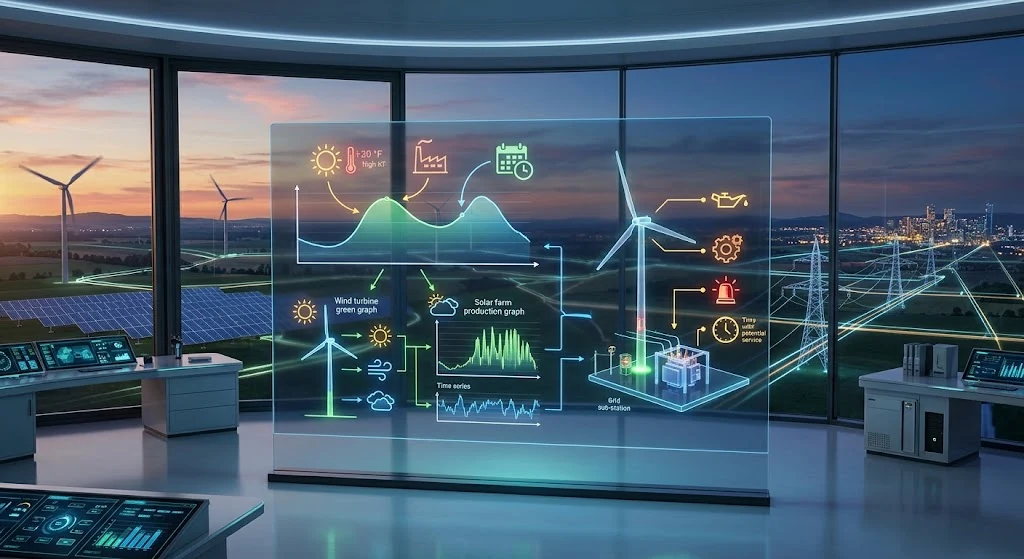
Artificial Intelligence plays a key role in developing smart environmental solutions today. In fields such as agriculture, energy, and climate science, algorithms help analyze satellite images, detect early signs of wildfires, and track pollution in oceans and rivers.
Smart cities also use AI to optimize electricity and water consumption, improve traffic flow, and reduce carbon emissions. It is like having a “digital environmental engineer” working continuously to make the planet cleaner and more balanced.
Sustainable education is becoming an important global direction for the future of learning, where Artificial Intelligence plays a growing role. Beyond online learning or grading, AI is now used to teach students sustainability values and environmental awareness.
Through intelligent virtual labs and digital simulations, students can explore how human activities affect the environment and test real-life solutions in a safe and interactive way. Adaptive learning systems also help reduce paper and energy waste by customizing lessons according to each student’s needs.
Today, universities are more than places of learning—they are becoming small models of sustainable communities. These institutions can use AI to manage energy in buildings, automatically control lighting and air conditioning, and monitor resource usage to reduce waste.
This transforms universities into intelligent and eco-friendly systems that shape a new generation who sees technology not as harmful to nature, but as a tool to protect it.
Using AI in education not only changes learning tools but also builds a new mindset that connects science with environmental responsibility. Students who learn through AI models understand that every algorithm can make a difference in the planet’s future.
Sustainable universities worldwide are leading examples of combining education, technology, and environmental care.
Universities such as Stanford, Cambridge, and Berkeley have successfully used AI to reduce energy and water consumption and lower carbon emissions.
The National University of Singapore follows a “zero waste” strategy and uses smart tools to track resource usage. In the Arab world, the American University in Cairo is known for its green design and solar energy usage, while King Abdullah University of Science and Technology (KAUST) is recognized for its smart buildings and LEED Platinum certification.
Qatar University and the University of Jordan also use solar energy and eco-friendly transportation systems. What distinguishes these institutions is their comprehensive approach, making sustainability part of everyday life and education rather than just a concept.
AI is used as a real tool to teach people how to protect the planet and develop environmentally friendly solutions for a better future. In Egypt as well, universities such as the Egyptian Chinese University in Cairo are moving toward sustainability-focused initiatives.