
Dr. Doaa Mohi El-Din: From Artificial Intelligence to Predictive Medicine: A Scientific Vision for a More Humane Medicine
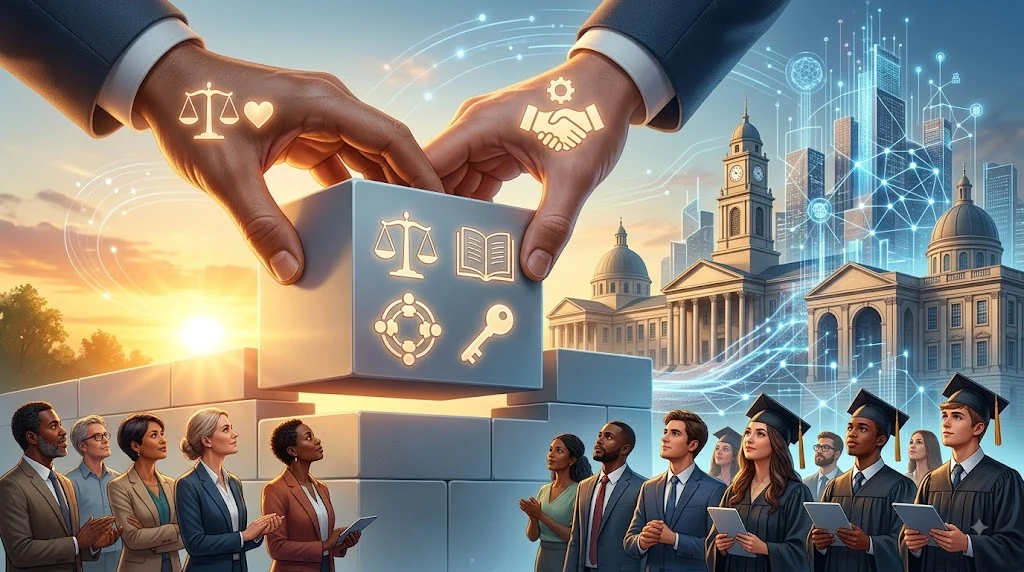
Ethical and Administrative Leadership… The Cornerstone of Building the Universities of the Future
In a world undergoing rapid changes driven by artificial intelligence and digital transformation, universities are no longer looking only for distinguished academics, but also for leaders who possess strategic vision, professional integrity, and the ability to manage resources and make decisions according to the highest standards of governance and responsibility.
Dr. Doaa Mohi El-Din, a faculty member at the Faculty of Computers and Information Systems and a consultant in Artificial Intelligence and Data Science, is guided by a firm belief that academic leadership is not an administrative authority, but rather an ethical mission based on fairness, transparency, respect for diversity, empowerment of competencies, and the promotion of a culture of teamwork. Successful leadership is leadership that creates an environment in which every student and faculty member feels like a partner in success, and where institutional achievement is the result of everyone’s collaboration.
As part of her interest in developing university education, she contributes to supporting the coordination of the Artificial Intelligence Program within the quality assurance framework, participating in the development of academic programs, academic advising, and promoting a culture of continuous improvement, in alignment with quality and academic accreditation standards.
She believes that modern management does not rely on reactions, but rather on strategic planning, risk management, performance measurement, analysis of achievement indicators, and evidence- and data-based decision-making. She also focuses on the efficient management of resources, maximizing the benefits of human and technological capabilities, and transforming challenges into opportunities for institutional development.
From an administrative leadership perspective, she places team building among her top priorities by encouraging collaboration among faculty members, supporting young professionals, clearly distributing responsibilities, and promoting a culture of initiative and innovation, thereby contributing to improved performance efficiency and the achievement of institutional goals.
She also believes that digital transformation is not merely about using technology, but rather about changing institutional culture, working methods, and mechanisms for delivering educational services. Therefore, she supports the use of artificial intelligence tools in education, curriculum development, improving the student experience, and enhancing the quality of the educational process.
She places particular emphasis on social responsibility and sustainability, based on her belief that the university plays a role that extends beyond the boundaries of the campus by preparing graduates who possess knowledge, values, creativity, and the ability to serve society.
Universities that aspire to leadership need leaders who combine ethical vision, administrative competence, strategic planning, quality, innovation, and the ability to lead change. When these elements are integrated, the educational institution transforms into an environment that develops leaders, produces knowledge, and contributes effectively to achieving sustainable development and building a knowledge-based economy.