Dr. Doaa Mohi El-Din: From Artificial Intelligence to Predictive Medicine: A Scientific Vision for a More Humane Medicine
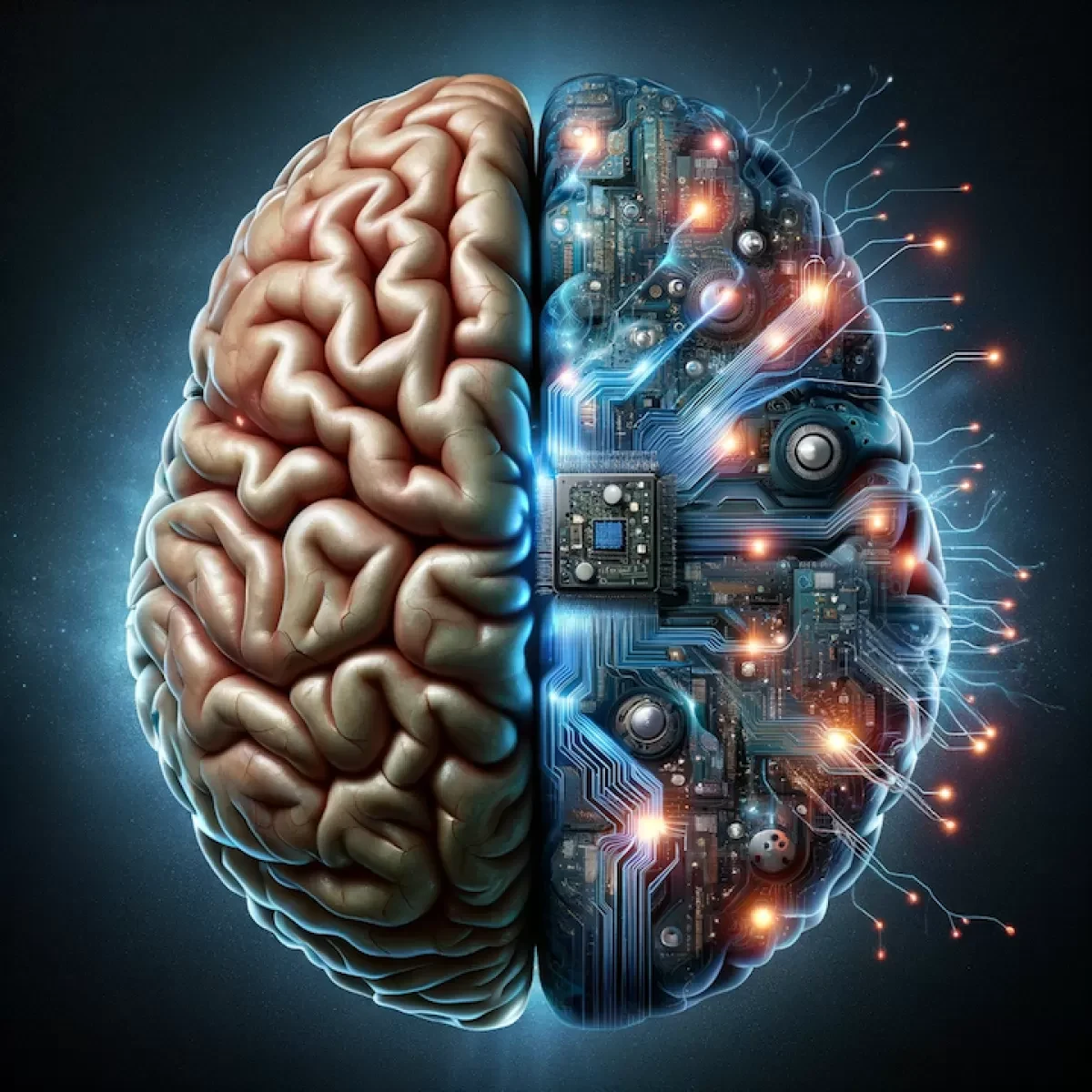
Dr. Doaa Mohey Eldin, Professor of Artificial Intelligence at the Faculty of Computers and Information Systems at the Egyptian Chinese University, indicates that the development of Artificial Intelligence is opening a new research direction to understand the relationship between the brain and the heart, in an attempt to simulate human cognition and memory patterns in a more integrated way.
She explains that despite AI’s ability to process millions of computations in seconds and make complex decisions, it still faces a fundamental scientific question: Can machines replicate human intelligence with the same efficiency? Current models, despite their computational power, still lack the sensory integration that characterizes human cognition, particularly in memory and emotion.
She adds that recent research has begun to move beyond the traditional view of the brain as a system based only on electrical signals and chemical interactions, toward broader models that integrate brain memory with physiological signals from the heart.
Studies in cardiac neuroscience suggest that the heart contains an intrinsic nervous system known as the Intrinsic Cardiac Nervous System, consisting of approximately 40,000 neurons, and communicates directly with the brain via the vagus nerve in what is known as brain-heart synchrony.
According to Doaa Mohey Eldin, this interaction has encouraged researchers to incorporate physiological heart signals—such as Heart Rate Variability (HRV)—into AI models, as variables that may reflect the body’s emotional and physiological state. This could enable the development of algorithms that better simulate the interaction between cognitive and emotional processes in humans.
She further explains that human memory itself is a well-established field in neuroscience, including short-term, long-term, semantic, procedural, and emotional memory. Biologically, it depends on synaptic plasticity and neural connectivity strengthening. Artificial neural networks have already succeeded in simulating many of these processes through mathematical models such as recurrent neural networks and long short-term memory models.
However, the emerging research direction, according to Dr. Doaa Mohey Eldin, aims to build additional modeling layers that integrate cognitive and biological inputs, allowing intelligent systems to analyze both cognitive and physiological signals within a unified mathematical framework. Theoretically, this represents a shift from simply simulating human behavior to modeling more complex cognitive and emotional patterns.
She emphasizes that this approach is still in the research phase and requires extensive data and experimentation before becoming practical applications. Nevertheless, it may represent a significant step toward developing AI systems capable of understanding human context more deeply, rather than merely processing data or imitating observable behavior.