Dr. Doaa Mohi El-Din: From Artificial Intelligence to Predictive Medicine: A Scientific Vision for a More Humane Medicine
From Discovering a New Molecule to Designing a More Precise Drug.. How Do Artificial Intelligence and Nanotechnology Come Together to Create the Treatments of the Future?
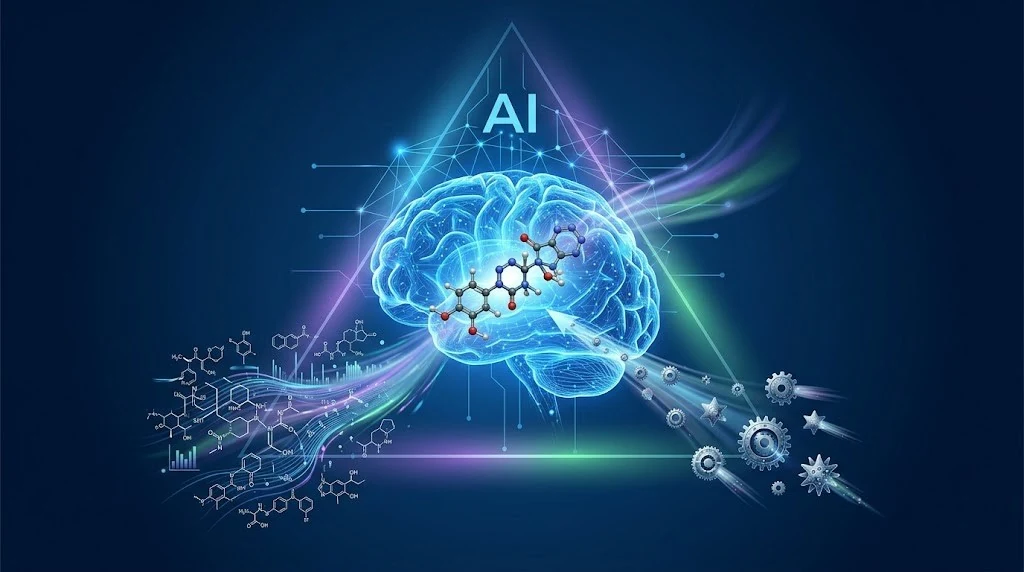
Drug development no longer relies solely on laboratories, lengthy experiments, and traditional processes for discovering pharmaceutical compounds. The world is entering a new phase in which biology, artificial intelligence, nanotechnology, and data analysis intersect to redefine the way we discover, design, and deliver drugs into the human body.
At the heart of this transformation lies a highly important question:
Can artificial intelligence become the brain that designs the drug, while nanotechnology becomes the means that delivers that drug to the right place inside the body?
The answer opens the door to one of the most exciting scientific revolutions in twenty-first-century medicine.
Artificial Intelligence.. From Searching Through Millions of Compounds to Discovering the Best Candidate
Developing a new drug is a complex and costly process. It begins with identifying a suitable biological target, then searching for compounds that can interact with it, followed by evaluating their properties, safety, and effectiveness, and then progressing through lengthy stages of testing before reaching clinical use.
Artificial intelligence can assist in several of these stages by analyzing massive amounts of biological and chemical data.
Algorithms can help researchers with:
Analyzing compounds and molecules.
Predicting certain properties of compounds.
Discovering patterns in genetic and protein data.
Suggesting candidate molecules for further research.
Improving the design of certain compounds.
Supporting the study of interactions between drugs and biological targets.
Helping predict certain drug-related risks.
This is where the philosophy of drug discovery shifts from relatively random searching toward a process that relies more heavily on data and computational modeling.
But Drug Discovery Is Not the End of the Story
Even if artificial intelligence succeeds in suggesting a promising compound, a more complex question remains:
How do we deliver this drug to the required location inside the body?
This is where nanotechnology comes in.
Nanotechnology enables the development of extremely small materials and systems that can be designed to perform different roles in drug delivery, such as improving solubility or stability, controlling the release of the pharmaceutical substance, or improving its delivery to specific tissues.
This is where the true relationship between the two fields begins.
Artificial Intelligence Designs.. Nanotechnology Delivers
The concept can be simplified into a future-oriented equation:
AI → Drug Discovery
Nanotechnology → Drug Delivery
But the relationship can become even more integrated:
AI + Nanotechnology → Intelligent Drug Delivery
Artificial intelligence can help select the characteristics of a particular drug delivery system, while nanotechnology provides the platform through which that system can be developed and tested.
This integration may be particularly important in areas that require more targeted drug delivery.
From General Drug Therapy to More Targeted Treatment
One of the greatest challenges in drug therapy is that a therapeutic substance may affect tissues other than the intended target tissue.
Therefore, improving drug delivery can help increase efficiency and reduce certain undesirable effects, depending on the type of treatment and the platform used.
Nanotechnology enables the development of multiple systems for delivering pharmaceutical substances, while artificial intelligence can help analyze the relationship between:
Properties of the nanomaterial + Drug properties + Biological environment + Release pattern.
This opens the door to more intelligent design of drug delivery systems.
Artificial Intelligence and Nanotechnology in Cancer Treatment
Cancer represents one of the most important fields in which the potential of this integration becomes apparent.
The disease is not a single condition, but rather a large group of different types and biological patterns.
Artificial intelligence can analyze molecular data, medical images, and clinical data to help identify patterns that may be difficult to analyze manually on a large scale.
At the same time, nanotechnologies can contribute to the development of more targeted drug delivery systems for certain research applications.
However, it is important to emphasize that these technologies do not automatically mean the existence of a “miracle cure,” as many applications still require rigorous research and experimentation to establish their effectiveness and safety.
Nanotechnology.. A Small World with a Major Impact
When we talk about nanotechnology, we are dealing with extremely small dimensions, yet the potential impact is significant.
Changing the size, shape, and surface composition of particles can affect their properties and behavior, which makes the design of nanotechnology-based drug systems a complex and multidisciplinary field.
This is where the importance of artificial intelligence becomes clear.
As the number of variables increases, it becomes more difficult to test every possibility manually.
Computational models can help explore a broad design space and suggest combinations or characteristics that deserve further investigation.
Toward the “Smart Laboratory”
The future may involve more than simply using artificial intelligence to analyze experimental results.
We may move toward the concept of:
AI-Driven Drug Discovery Lab
Where a range of intelligent tools work through the following cycle:
Suggest → Simulate → Select → Experiment → Analyze → Learn → Suggest Again.
This creates a faster, more data-driven research cycle.
However, humans remain at the center of the process, because computational results require experimental validation, and prediction is not definitive proof of safety or effectiveness.
When a Drug Becomes “Designed” for the Patient
The most exciting stage may be the intersection of artificial intelligence with the concept of Precision Medicine.
Instead of treating patients as a single group, a wide range of data can be analyzed to identify differences among individual patients.
Artificial intelligence may help analyze:
Genetics + Proteins + Medical Images + Clinical Data + Medical History
to help select or design more appropriate therapeutic strategies.
As drug delivery technologies continue to advance, the question:
“What is the right drug?”
may become increasingly connected to another question:
“What is the right drug for this patient, and what is the best way to deliver it?”
But Technology Needs Ethics
The closer artificial intelligence gets to the human body, the greater the need for responsibility.
A model that predicts that a certain compound may be effective cannot simply be accepted without understanding the level of uncertainty and the risks of error.
Nor can an artificial intelligence system be relied upon for sensitive pharmaceutical decisions without scientific and clinical validation.
Patients’ genetic and medical data also require the highest levels of protection and governance.
Therefore:
AI for Drug Discovery
must evolve in parallel with:
Explainable AI
and
AI Governance
and
Data Privacy
and
Clinical Validation
and
Human Oversight.
From Artificial Intelligence to “Pharmaceutical Intelligence”
This integration could lead to a more comprehensive concept:
Intelligent Drug Design & Delivery
An integrated system that begins with understanding the disease, then identifying the biological target, designing the compound, analyzing its properties, selecting the appropriate delivery platform, studying the response, and finally analyzing the results.
It can be envisioned as follows:
Disease Data
AI Analysis
Target Identification
AI Drug Design
Nanotechnology-Based Delivery
Experimental Validation
Clinical Evaluation
Continuous Learning
Here, artificial intelligence becomes part of the drug life cycle rather than merely a separate tool.
The Economy Will Change as Well
This transformation will not affect medicine alone.
The pharmaceutical industry is one of the largest industries in the world, and any reduction in the time required to discover promising candidates or improve research processes could have major economic implications.
The development of more efficient pharmaceutical platforms may also create new opportunities for:
Biotechnology companies, pharmaceutical companies, research centers, universities, and startups.
Consequently, the intersection of:
AI + Pharma + Nanotechnology
may become one of the most important economic and technological sectors of the future.
Egypt and the Arab World.. An Opportunity, Not Just a Challenge
This field represents a major opportunity for Arab universities and research centers to build new disciplines at the intersection of:
Artificial Intelligence + Data Science + Pharmacy + Chemistry + Nanotechnology + Medicine.
The real advantage will not come solely from owning advanced equipment, but from building multidisciplinary teams capable of transforming data into discoveries, discoveries into products, and products into health and economic impact.
The Future Is Not a More Powerful Drug.. But a More Intelligent Drug
Ultimately, the next revolution in the pharmaceutical industry may not simply involve discovering a greater number of compounds.
Rather, it may lie in the ability to achieve:
Better discovery, more precise design, more targeted delivery, faster analysis, and treatment that is better suited to the patient.
This is where artificial intelligence and nanotechnology meet at a single point:
Artificial intelligence gives researchers greater capabilities for “design and prediction,” while nanotechnology provides the capabilities for “engineering and delivery.”
But true success will not be achieved through the algorithm alone, nor through the nanoparticle alone.
Rather, it will come through an integrated system that combines:
Science + Data + Artificial Intelligence + Nanotechnology + Experiments + Ethics + Humans.
Perhaps the future of drug development lies in moving from “a drug that is discovered” to “a drug that is intelligently designed and precisely delivered.”
And this is where one of the most exciting eras in medicine begins:
The era of smart drugs, smart nanotechnology, and artificial intelligence that helps humans discover more precise and safer treatments.