Dr. Doaa Mohi El-Din: From Artificial Intelligence to Predictive Medicine: A Scientific Vision for a More Humane Medicine
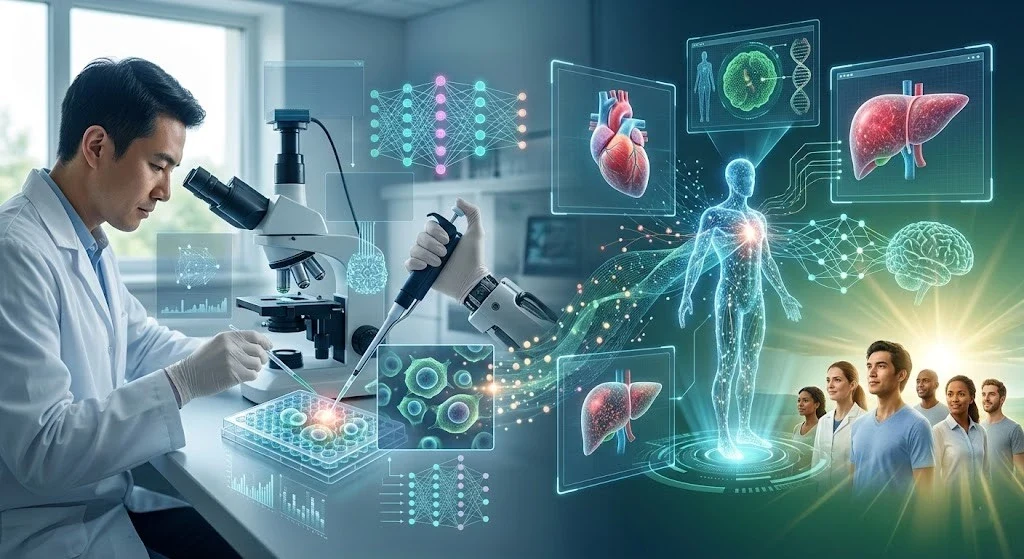
Artificial intelligence is no longer merely a technology for data analysis; it has become one of the most important tools that scientists rely on to reshape the future of healthcare and medical research. Among the promising fields where the power of artificial intelligence intersects with life sciences is stem cell research, which opens new horizons for understanding diseases and developing treatments.
In this context, Dr. Doaa Mohi El-Din’s vision stands out in employing artificial intelligence technologies to serve medical and research applications, based on her belief that the future will not depend solely on treating disease after it appears, but rather on the ability to understand early indicators and predict risks before they develop.
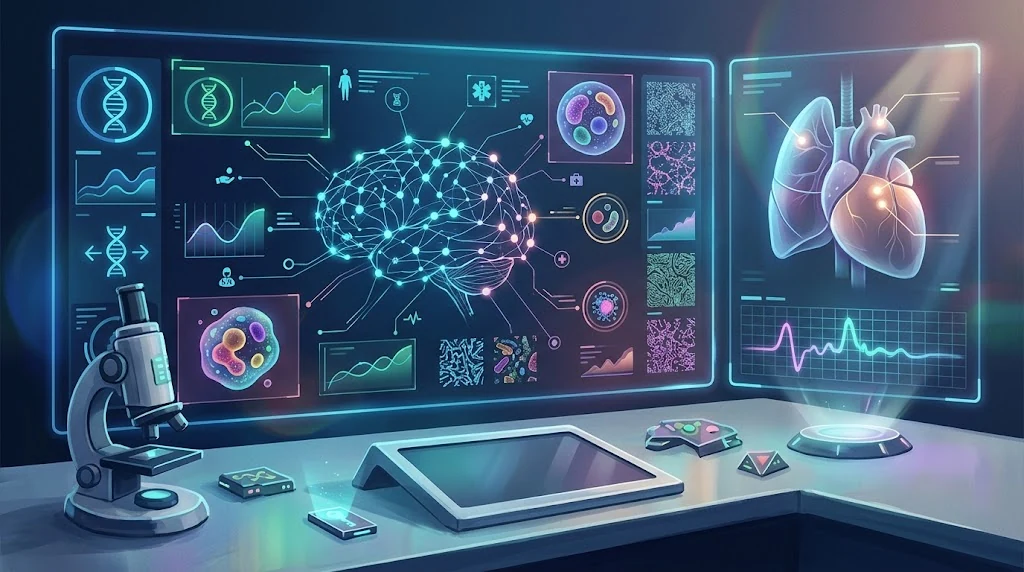
Stem cells provide a vast amount of biological data that can be analyzed using machine learning and artificial intelligence techniques, ranging from studying and classifying cell characteristics to analyzing changes that may be associated with the emergence of certain diseases or responses to different treatments.
This is where the importance of integration between computer science and medicine becomes evident; artificial intelligence can process complex patterns that are difficult to detect using traditional methods, while biology and medicine provide the scientific context necessary to understand these patterns and transform them into applicable knowledge.
Dr. Doaa adopts a human-centered artificial intelligence perspective, in which technology is not an end in itself, but rather a means to improve diagnosis, support physicians, accelerate scientific research, and enhance patients’ quality of life.
This approach represents a model of interdisciplinary research, where artificial intelligence intersects with medicine, biology, and bioengineering, opening the door to more precise research in the fields of regenerative medicine, drug discovery, and the study of complex diseases.
In the future, this integration could contribute to building models that are more capable of analyzing medical and biological data, supporting researchers in discovering new biomarkers, designing more precise studies, and gaining a deeper understanding of disease-related mechanisms.
The future vision here is not about replacing physicians with machines, but rather about building a partnership between humans and artificial intelligence, in which the physician remains the decision-maker, while artificial intelligence becomes a powerful cognitive tool to support research, diagnosis, and treatment.
By Dr. Doaa Mohi El-Din
Dr. Doaa Mohi El-Din
Artificial Intelligence Program Coordinator – Computer Science Department
Faculty of Computers and Information Systems
Egyptian Chinese University