12 Trends Reshaping the Future of Artificial Intelligence
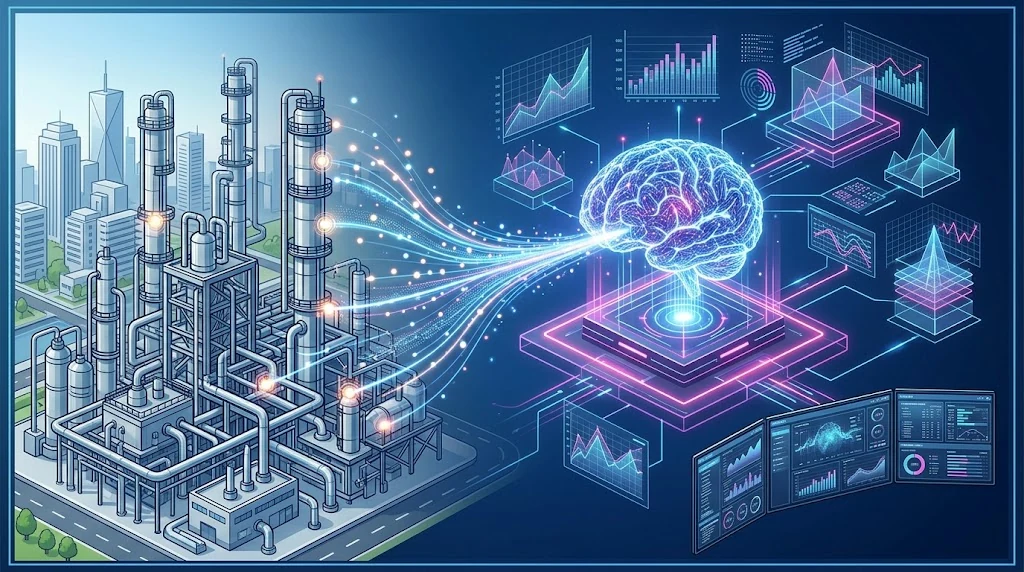
From a Digital Model That Simulates Reality to an “Intelligent Twin” That Understands, Learns, Predicts, and Evolves
What if the digital twin were no longer merely an electronic copy of a system that exists in the real world?
What if it became capable of understanding what is happening, learning from data, discovering patterns, simulating the future, predicting risks, and helping humans make decisions?
This is where a new stage in the evolution of the Digital Twin begins, when it converges with the capabilities of Cognitive AI.
From this perspective, Dr. Doaa Mohi El-Din presents a research vision that goes beyond the traditional concept of the digital twin toward building a new generation of digital twins for cognitive artificial intelligence; a form of digital twinning that does not merely represent reality, but seeks to understand it, analyze its developments, and simulate its future scenarios.
From a “Digital Copy” to a “Digital Mind”
In its traditional form, a Digital Twin represents a digital model of a real entity or system, receiving data and reflecting the condition of that system in the real world.
But the real evolution begins when artificial intelligence capabilities are added to this model.
At that point, the digital twin can move from simply answering the question:
What is happening now?
to deeper questions:
Why is it happening?
What will happen next?
What could happen if one of the factors changes?
What is the best scenario?
Here, the twin is no longer merely a “digital image,” but becomes an intelligent environment for learning, analysis, simulation, and prediction.
Why Cognitive AI?
Cognitive artificial intelligence represents a direction that seeks to build systems capable of handling certain cognitive processes in a more integrated way, such as:
perception, understanding, learning, reasoning, memory, adaptation, and decision-making.
When these capabilities are integrated with the Digital Twin, it becomes possible to build systems capable of learning from changing data, understanding context, analyzing scenarios, and providing more intelligent support to decision-makers.
The equation then becomes:
Digital Twin sees reality.
Cognitive AI understands the data and context.
Simulation explores the future.
AI Prediction anticipates scenarios.
Human Decision-Maker makes the decision.
This is where the true value of this integration emerges.
The Digital Twin That Learns from Reality
One of the most important transformations in this direction is that the digital twin should not be a static model.
Reality is constantly changing.
Data changes, behavior changes, and surrounding conditions change.
Therefore, the more advanced twin is one that can update its knowledge as data changes, discover new patterns, and reassess scenarios.
This is where machine learning and artificial intelligence come into play.
Instead of having:
Digital Model
we can move toward:
Learning Digital Twin
and then to:
Cognitive Digital Twin.
That is, a digital twin with greater capabilities for learning, understanding, analysis, and prediction.
When the Future Becomes Simulatable
One of the most exciting aspects of this vision is the ability to use the digital twin as an environment for testing the future before it happens.
Instead of applying a certain decision directly to the real system, a digital scenario can be created:
What happens if demand increases?
What happens if a failure occurs?
What happens if user behavior changes?
What happens if resources change?
Artificial intelligence can then analyze and compare the different scenarios.
In this way, simulation transforms from merely an engineering tool into a tool for supporting strategic decision-making.
From Smart Cities to Smart Medicine
This vision can extend across many fields.
In smart cities, digital twins can be used to simulate traffic, energy, services, and resources.
In industry, they can help monitor processes, predict failures, and improve maintenance.
In energy, consumption patterns can be analyzed and different scenarios can be simulated.
And in healthcare, AI-powered digital twins can open new possibilities for studying health indicators, simulating certain scenarios, and supporting medical decision-making, while adhering to clinical and ethical requirements.
Here, the strength of the idea becomes clear:
We are not simply building a digital model of a machine, but rather an intelligent environment for understanding the system and predicting its behavior.
Digital Twinning for Cognitive Artificial Intelligence
The more advanced vision lies in building a digital twin in which the capabilities of cognitive artificial intelligence are an essential part of the system.
The architecture can be envisioned as follows:
Real World
↓
Digital Twin
↓
Data & Sensors
↓
Cognitive AI
↓
Learning + Reasoning
↓
Simulation + Prediction
↓
Decision Support
↓
Human Feedback
Then, the new information returns to the twin again, creating a form of continuous learning loop.
In this way, the system becomes capable of evolving as reality changes rather than relying on a static model.
The Human Does Not Leave the Equation
Despite these capabilities, the human-centered vision of artificial intelligence raises a fundamental question:
Who makes the final decision?
The answer must remain clear, especially in sensitive fields:
The human.
Artificial intelligence can analyze data, discover patterns, simulate scenarios, and suggest alternatives, but it should not automatically become the final decision-maker in decisions that affect human life or rights.
This is where concepts such as:
Explainable AI
and
Ethical AI
and
Human-in-the-Loop
are not optional additions, but essential components in the design of future intelligent systems.
From Technology to Leadership
Building this type of system does not require only programmers and artificial intelligence engineers.
It also requires multidisciplinary teams that bring together:
artificial intelligence, data science, systems engineering, simulation, cybersecurity, management, and applied sciences.
Here, the importance of academic leadership becomes clear; leadership capable of building teams, managing research projects, connecting different disciplines, and transforming scientific ideas into applicable projects.
Dr. Doaa Mohi El-Din’s vision reflects an approach toward building an academic environment that does not merely teach artificial intelligence, but seeks to employ it in solving real-world problems and connect it with digital transformation, quality, sustainability, and scientific research.
From Artificial Intelligence to “Cognitive Intelligence”
Perhaps the most important development in the future will not be for machines to become faster, but for them to become more capable of:
understanding.
learning.
adapting.
predicting.
explaining.
and helping humans make decisions.
This is the essence of cognitive artificial intelligence.
When these capabilities are added to the digital twin, we move from:
Digital Twin
to:
Intelligent Digital Twin
and then to:
Cognitive Digital Twin
a direction that can redefine how institutions deal with complex systems by moving from monitoring to understanding, from reaction to anticipation, and from managing the present to simulating the future.
The Future Is Not a Copy of Reality… but a Reality That Can Be Understood Before It Happens
In the end, the power of the digital twin does not lie in its ability to tell us what is happening now.
Its greater value lies in helping us understand:
What is happening?
Why is it happening?
What could happen next?
And what can we do now?
Here, the vision of Dr. Doaa Mohi El-Din, Faculty Member at the Faculty of Computers and Information Systems and Consultant in Artificial Intelligence and Data Science, takes shape:
“To make the digital twin more than a digital copy of reality… to make it a cognitive system that learns from reality, simulates the future, and supports humans in decision-making.”
The future may not lie only in building more powerful artificial intelligence, but also in building digital twins that are more cognitively capable, more able to learn, more transparent, and more committed to human-centered values.
And from here, a new stage begins:
Digital twinning does not merely reflect the world… it begins to understand it.